Custom website or template? Here is the difference
Buying a template or having a website built from scratch: that choice causes business owners more doubt than it needs to. This article sets out the difference on the four points that really matter. What does it cost, how long does it take, who owns the website afterwards, and how easily can you extend it later? That lets you decide which route fits your business.
What is the difference between a template and a custom website?
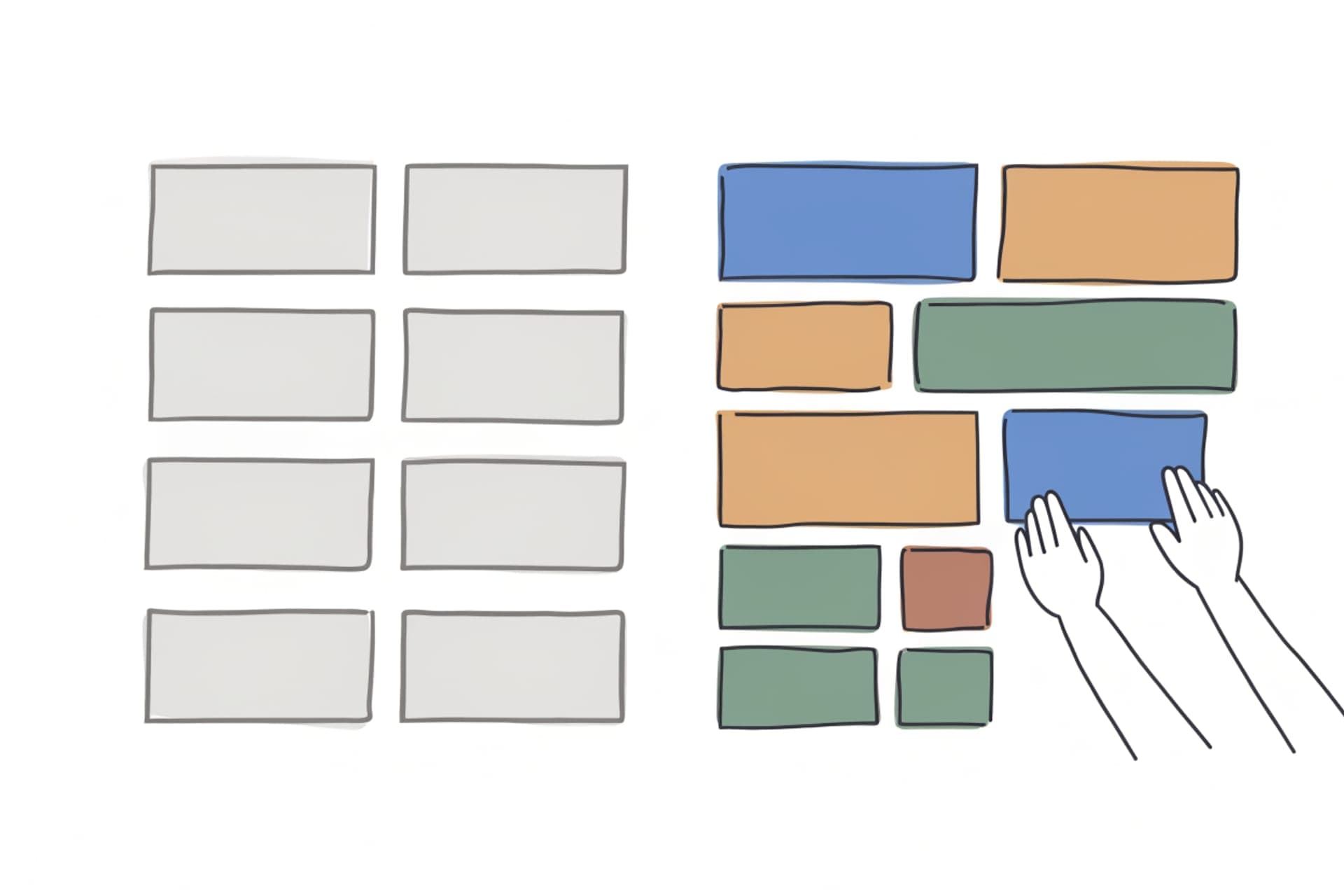
A template is a design that has already been built. You fill in your own texts, colours, logo and photos. Compare it to a house that is already standing: you choose the interior, but not the floor plan.
A custom website is built from scratch. Every page and every feature is worked out around what your customers are looking for and what you want to achieve. So you set the floor plan too.
The difference is not in the looks. A well filled template can look perfectly good, and an expensive custom site can disappoint. The difference is in the room you have left. With a template you work within boundaries someone else has drawn. With a custom build you draw those boundaries yourself.
One thing up front, so we mean the same thing. This article is about the build choice, not about the platform choice. Which system your site runs on later is a separate decision with its own advantages and drawbacks. What we advise there is set out in WordPress, Shopify or custom. Below it is purely about ready made against built from the ground up.
Lead time: online in a week or in two months
This is the difference you notice fastest.
With a template you can be live within a week. The design is already there, you fill it in and you publish. That is a real advantage when you need to be found tomorrow, for instance because you have just started or because your old site is down.
A custom website takes more time. First we work out what the site has to deliver, then comes the design, then the build and then the testing. Count on several weeks, and on a few moments where you have to look along and decide.
What causes the delay is exactly the same in both cases: texts and photos. A template that stays half empty for three months goes live later than a custom site whose texts were ready on time. If you want to know where the time goes per step, read how long it takes to have a website built.
The budget: the first invoice and the invoice over three years
On the first invoice a template almost always wins. You pay for the design and for a subscription, and you do the rest yourself.
But a website is not a one off purchase. So look at three years instead of at the first month. Count in:
- the fixed costs for hosting, subscriptions and licences
- the paid add-ons you turn out to need along the way
- the hours you or someone on your team put in yourselves
- the cost of starting over when the site no longer fits
That last item is forgotten most often and is usually the most expensive. With a custom build a larger share of the amount sits at the start, and after that there are fewer surprises. Concrete amounts per type of website are in what having a website built costs in 2026.
In short: cheap is not the same as good value, and expensive is not the same as good. Count your own hours and the comparison often works out differently than you expected.
Who actually owns your website?
This is the question almost nobody asks up front and that hurts most afterwards.
With many template services you rent instead of buy. The design, the building blocks and sometimes even your pages stay on the provider's platform. Stop paying and your website stops. Moving on is then usually only possible with your texts, not with your design.
With a custom website the arrangement is often simpler: the files are yours and you can take them to another party.
So always ask three questions before you sign, whichever route you choose:
- Whose name is the domain name registered under?
- Where are the files, and do I get them if I leave?
- What happens to my website if I stop paying?
You need maintenance either way. Software ages, integrations break and security holes are closed with updates. What that involves is explained under website maintenance.
Extending: what happens when your business changes?
Most websites do not break. They outgrow their jacket.
You start with five pages and a contact form. Two years later you want to schedule appointments online, send quotes, open a client portal or sell products. With a template you solve that by installing separate add-ons. Every add-on is code from a different maker. They rarely work together seamlessly, they slow your site down and they all have to be maintained separately.
With a custom build such a feature is built into what is already there. That costs more per time than clicking an add-on, but you get exactly what you need and you do not stack loose parts on top of each other.
The rule of thumb is simple. The bigger the chance that your site has to do something different in two years, the heavier a custom build weighs. How to plan for that growth is in let your website grow with your business.
When a template is simply the best choice
We build custom websites, and still we regularly advise a template. In these situations that is the sensible choice:
- You have just started and want to know first whether there is demand for what you offer.
- You mainly need a tidy business card: who you are, what you do, how to reach you.
- Your site does not need any special features.
- You have the time and the appetite to set the site up and keep it current.
- It is something temporary, such as a campaign or a one off project.
A template is then not half a solution but a fine start. You buy speed and certainty with it, and you keep budget for the things that deliver more at that moment.
Considering doing it entirely yourself? Then weigh that up deliberately in making a website yourself or having one built.
When a template costs you money later
There are also clear signals that you are running into the limits:
- You adjust what you offer because the template cannot show it any other way.
- Your pages load slowly, because a lot of code comes along that you never use.
- You cannot find yourself in Google, not even on your own service plus your town.
- A competitor uses the same template, so visitors see no difference.
- Every change costs you half a day, or it simply cannot be done.
That second point can be solved on its own: which changes actually make a site faster is set out in a faster website.
If you recognise two or more of these points, your website is probably costing you customers instead of delivering them. What to do about it is in five signals that your website is costing you customers. If it is mainly about visibility, start with SEO for existing websites. That is usually a lot cheaper than rebuilding.

Five questions that sharpen the choice in ten minutes
Take a sheet of paper and answer these five questions. They work better than a list of pros and cons, because they are about your situation.
- What does the website have to deliver concretely in twelve months? Ten enquiries a month is a different starting point than simply being online.
- Which feature do you really need that is not standard? Write down three at most. If you cannot think of any, that is an answer too.
- How many hours do you want to put in yourself every month? Zero hours is a perfectly good answer, but it does steer the choice.
- How bad is it if your site looks like a competitor's? For an installer usually not that bad, for a design studio it is.
- What happens if you want to move in two years? Can you take your design, your texts and your measurement data with you?
If three or more answers point towards growth, own features and few of your own hours, a custom build is the logical route. If they point towards fast, small and doing it yourself, start with a template.
Starting with a template and switching later
That is possible, and it happens often. Just be honest about what comes along.
Your texts, your photos, your domain name and your customer data come with you. The design and the technical foundation do not: those are built again. So do not count on a move but on a new build with familiar content.
Three things make that switch a lot cheaper later:
- Register the domain name in your own company's name from day one.
- Keep your texts and photos outside the platform as well, in your own folders.
- Switch on measurement straight away, so you know later which pages deliver customers.
If you are stuck with a dated site whose content is still fine, rebuilding is not always necessary. Modernising your WordPress website explains when a refresh is enough.
How we approach it
We do not start with the design but with the question of what the website has to deliver. Only then do we look at which build form fits. Sometimes that is a custom build, sometimes a simple site that can go live quickly.
What you always get from us: a fixed price up front, one point of contact and a website that is yours. What you do not get: a package full of features you have no use for.
Curious what that looks like in practice? View our work and pay attention above all to what those sites do, not only to how they look.
Frequently asked questions
Is a custom website more expensive?
Yes, the first invoice is higher than with a template. Counted over three years the difference is often smaller, because hosting, add-ons, maintenance and your own hours count too. The amounts per type of website are in what having a website built costs in 2026.
How long does it take to build a custom website?
Usually between four and eight weeks, depending on the scope. A compact site is ready sooner, a site with a webshop or integrations takes longer. The biggest delay is almost always in delivering texts and photos. It is worked out step by step in how long it takes to have a website built.
Can I switch from a template to a custom build later?
Yes. Do keep in mind that in most cases you start over. Your texts, photos and domain name come along, but the design and the technology are built again. So register your domain name in your own company's name from day one and keep your texts outside the platform as well.
Do I own my website if I use a template?
Not always. With many template services you rent: the design and sometimes your pages stay on the provider's platform, and if you stop paying your website stops. So ask up front whose name the domain name is under, where the files are and whether you get them if you leave.
Can I extend a template site later with a webshop or client portal?
Usually yes, with separate add-ons that you install alongside. The drawback is that every add-on comes from a different maker: together they slow your site down and they all have to be maintained separately. With a custom build such a feature is built into what is already there, so you do not stack loose parts on top of each other.
How do I know which choice suits my business?
Answer five questions: what the site has to deliver in twelve months, which feature you really need, how many hours you want to put in yourself, how bad it is to look like a competitor, and what happens if you want to move. If the answers point towards growth and own features, a custom build is logical. If they point towards fast, small and doing it yourself, start with a template.
Ready to choose?
A template and a custom website are both good choices, just not in the same situation. The question is not which is better, but which fits what you want to achieve in the coming year.
Still unsure? Schedule a free consultation and we will walk through the five questions together. If you already know your direction and want to see what we build, look at having a website built.
Read more about how customers make choices online at Think with Google.