Payment methods: connect iDEAL | Wero in your webshop

A complete webshop stands or falls with the checkout. In the Netherlands customers expect iDEAL, which is now called iDEAL | Wero and is moving step by step to Wero, and besides that a few trusted alternatives. Here you read how to connect those payment methods, what a payment provider arranges for you and what to check before you go live.
The checkout moment is the most important point in your webshop. This is where the customer definitively decides to buy. A payment that does not work, a missing method or a confusing screen immediately leads to lost sales.
Customers who order directly on your own site expect paying to work just as normally as in a large shop. In this article you read which payment methods a Dutch webshop needs at minimum, what the move from iDEAL to Wero means for you, how to connect iDEAL | Wero and other methods, and how to choose the right payment provider. If you want to see the whole picture of building a webshop, also read our complete guide to having a webshop built or the step-by-step plan for starting a webshop.
Why iDEAL | Wero is indispensable in the Netherlands
In the Netherlands iDEAL is by far the most popular way to pay online. The vast majority of online payments run through iDEAL. Since early 2026 the button at checkout reads iDEAL | Wero: the same payment method, with the new name next to it. A Dutch webshop without this button misses a large part of its potential customers.
The reason is trust and ease. Customers pay directly through their own bank, in an environment they know. No entering credit card details, just logging in and confirming.
For you as a business owner, iDEAL | Wero means you receive the payment directly and have certainty that the money is in. For the Dutch market it is therefore not an option, but a requirement. Always start with this.
If you are missing this button, customers drop off at the very last moment. They have chosen their product, are ready to pay, but do not see their trusted button. That is the most expensive place to lose a customer, because all your work to get them there has then been for nothing.
Which payment methods does your webshop need?
Besides iDEAL, customers expect a number of other trusted options. Which ones you offer exactly depends on your audience and whether you also sell across the border.
For a Dutch webshop these are the most common methods:
- iDEAL (essential)
- credit card (for international customers and business buyers)
- pay later, for example via a service like Klarna
- digital wallets such as Apple Pay and Google Pay
- PayPal (especially for international sales)
- bank transfer (less used, but sometimes desirable)
You do not have to offer everything. Too much choice can even be confusing. Start with iDEAL | Wero and one or two additions that suit your customers, and expand later based on what they ask for.
From iDEAL to Wero: what changes?
Wero is a European payment method from the European Payments Initiative, a partnership of European banks and payment service providers. The Dutch banks are moving iDEAL to Wero step by step. That happens in phases:
- early 2026: the iDEAL logo in webshops and banking apps was replaced by iDEAL | Wero
- from October 2026: all Dutch banks are connected to Wero and payments gradually move to the Wero system
- by the end of 2027 at the latest: according to the planning the switch should be complete by then, after which the name iDEAL disappears and Wero remains
That last date is a goal of the banks and payment providers, not a hard deadline. Stripe, for example, expects iDEAL to be phased out between 2027 and 2028.
For your customers little changes. They choose the familiar button, pick their bank and approve the payment as they are used to.
For you the switch runs through your payment provider. If you use your provider's standard checkout page or plugin, it updates the logo and the name itself. If you have your own custom-built checkout screen, check that it already shows iDEAL | Wero. In the next phase your provider may ask you to accept an agreement or new terms for Wero. That differs per provider. So ask your provider about the planning for your shop.
Wero also brings new options. Purchase protection is coming: a customer can then dispute a payment, for example when an order does not arrive. The aim is for that protection to apply in full by 1 January 2028 at the latest. Recurring payments for subscriptions are planned for 2027. Existing subscriptions that run on direct debit use a separate mandate and simply continue.
What is a payment provider and how does it work?
You do not connect payment methods one by one yourself. For that you use a payment provider, also called a payment service provider. That is an intermediary that connects all payment methods to your webshop in one go.
It works like this:
- the customer chooses a payment method at checkout
- the payment provider processes the payment securely
- the money is collected and paid out to your account
- you see all payments clearly in a dashboard
The big advantage is ease. Instead of signing a contract with every bank and every method separately, you arrange everything through one party. Well-known payment providers in the Netherlands include Mollie and Stripe, but there are more.
A payment provider therefore takes a lot of work off your hands. It handles the secure processing, the payout and the overview. You only have to choose which methods you offer and how your shop looks. That makes the step to online payments surprisingly accessible for most business owners, even without technical knowledge.
How do you connect iDEAL | Wero to your webshop?
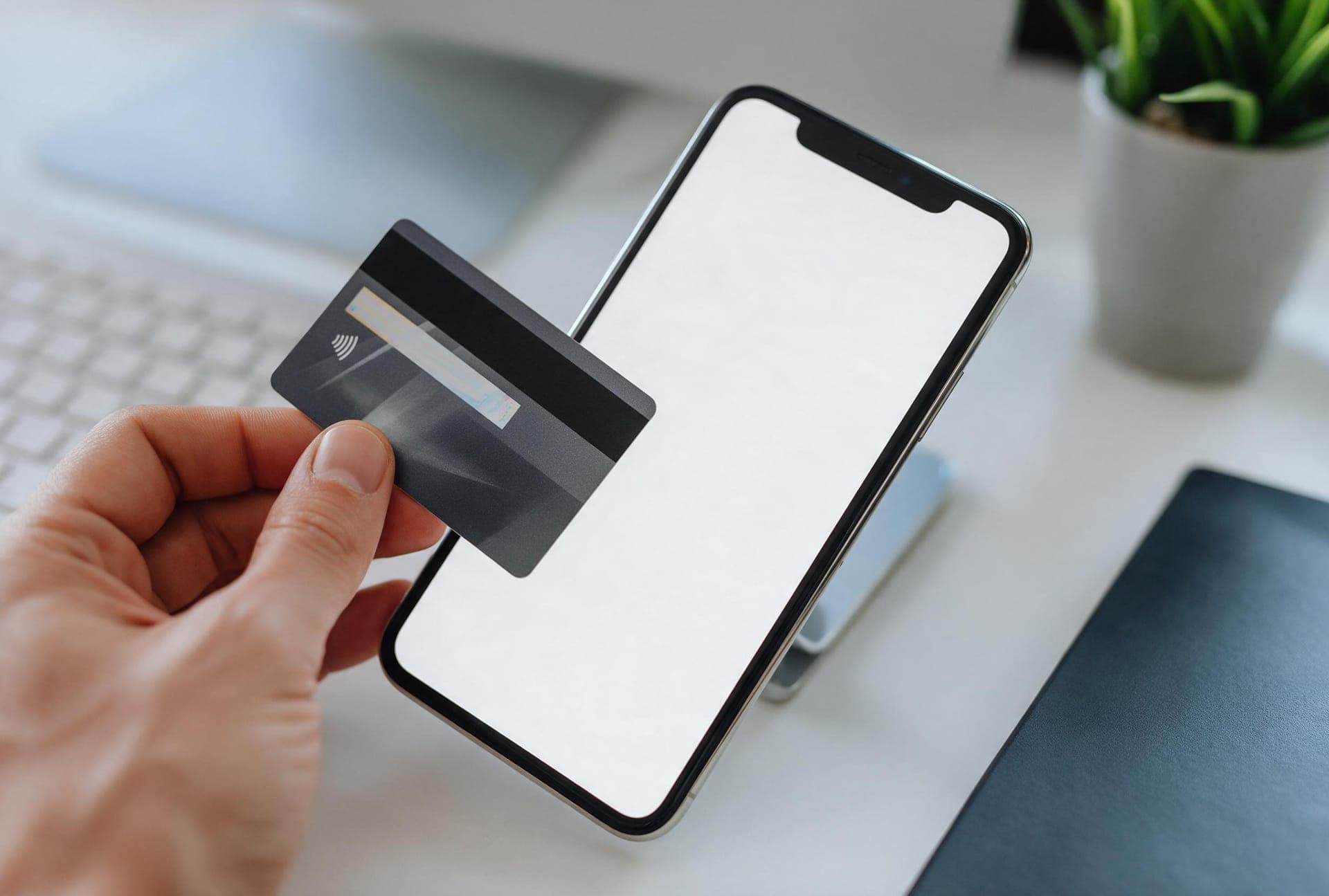
Connecting iDEAL | Wero in practice goes through your payment provider. So you do not have to sign a separate contract with the banks. The steps are roughly:
- create an account with a payment provider
- go through the verification of your business (registration, bank account)
- connect the payment provider to your webshop, often with a ready-made extension
- activate iDEAL | Wero and the other desired methods
- do a test payment to check that everything works
With most platforms the connection is simple: you install an extension and fill in your account details. If you are still unsure about your platform, our comparison of Shopify and WooCommerce helps with that choice. With a complete custom webshop the connection is built to measure. If you have a webshop built, we arrange this connection for you, including the test payment.
What does processing payments cost?
Processing payments is not free. A payment provider charges costs, usually per transaction. It is important to include this in your prices and margin.
The costs usually consist of (indicative, differs per provider):
- a fixed amount per transaction
- sometimes a percentage of the amount
- possibly monthly or fixed costs
Different methods have different rates. iDEAL | Wero currently often has a fixed amount per transaction, while credit card and pay later usually have a percentage. For small amounts a fixed fee can weigh relatively heavily.
The agreement is that Wero's rates stay largely at the current iDEAL | Wero level up to and including 2028. What the costs will be after that is not yet known. Several parties expect a percentage of the amount instead of a fixed amount, which weighs more heavily on higher order values.
Compare providers on the methods you expect to use. A provider that is cheap for iDEAL | Wero but expensive for credit card can still fit if most of your customers pay that way. If you want to know which other costs come with a webshop, read what having a webshop built costs.
How do you choose the right payment provider?
There are several good payment providers, and the best choice depends on your situation. When choosing, pay attention to a number of points.
Important considerations:
- which payment methods does the provider support?
- what are the costs per transaction and per month?
- how easily does it connect to your platform?
- how quickly are payouts made?
- how is the customer service if something goes wrong?
- is there a fixed contract or do you pay per use?
- how and when does the provider move you to Wero?
For most starting and smaller webshops a provider without a fixed contract is attractive: you only pay what you use. If you grow fast, a provider with fixed agreements can become cheaper. So choose to suit your phase.
Security and trust around payments
Customers only spend their money if they trust your shop. Secure payments are therefore not only technology, but also a matter of inspiring trust.
In any case, make sure of:
- a secure connection (the padlock in the address bar)
- a payment provider that meets the applicable security rules
- clear information about shipping, returns and conditions
- recognisable, up-to-date payment logos at checkout, such as iDEAL | Wero
- a tidy, professional appearance
The payment provider takes care of the technical security of the transaction. You take care of the appearance that inspires trust. Together they determine whether a customer dares to check out. A messy checkout makes people doubt, precisely at the decisive moment.
Payments and selling across the border
If you also sell outside the Netherlands, your payment methods change with you. iDEAL is a Dutch method. Wero is also already used in Belgium, Germany and France. Paying in webshops is mainly live in Germany so far and is being rolled out in Belgium and France during 2026. In other countries customers often expect their own trusted options as well.
When selling across the border, think of:
- credit card, which is accepted almost everywhere
- Wero, for customers in Germany, Belgium and France, among others (ask your provider whether it is already available online there)
- local methods such as Bancontact in Belgium
- PayPal, which is strong internationally
- digital wallets such as Apple Pay and Google Pay
A good payment provider offers these methods without you needing a separate contract per country. Start with the countries where you really expect customers. Adding dozens of methods for countries where you do not sell only makes your checkout messier. Expand as your market grows, not as a precaution.
What happens after a payment?
A successful payment is not the end of the story. Behind the scenes a lot still has to be right, otherwise you end up with hassle with customers or your bookkeeping after all.
Pay attention to these points:
- the customer immediately receives a clear confirmation email
- the order comes in correctly in your system
- the stock is updated automatically
- the payment can be found in your provider's dashboard
- failed or cancelled payments are handled neatly
- you can easily issue refunds when needed
Refunds in particular are often forgotten. A customer who quickly gets their money back stays positive about your shop, even if an order goes wrong. So check not only whether paying works, but also whether the whole process around it is right. That prevents surprises at the moment you are busy.
Common mistakes with payment methods
The same mistakes are often made around payments. By knowing them, you prevent lost sales:
- forgetting iDEAL | Wero or still showing the old iDEAL logo
- offering too many payment methods, making it cluttered
- not including the transaction costs in the price
- not doing a test payment before the launch
- a checkout process that is too long or confusing
- not showing payment logos, so trust is lacking
- not testing refunds and failed payments
The solution is simple: start with iDEAL | Wero, add a few logical methods, test everything thoroughly and keep checkout short. A smooth, trusted payment is one of the best investments in your revenue.
The right payment methods as a foundation for selling
Payment methods seem like a technical detail, but they touch your revenue directly. A customer who wants to buy but cannot check out in their trusted way is a lost sale.
So keep it practical: for the Dutch market iDEAL | Wero is the foundation. Supplement it with a few methods that suit your customers. Choose a payment provider that fits your size and your platform, and that helps you with the move to Wero. And always test before you go live.
Want to be sure your payments work well from day one? We arrange the connection of iDEAL | Wero and other methods as part of your webshop, so you can focus on selling. Read more about customer experience and conversion on Think with Google. Discover our webshop options, see examples of our work or get in touch for advice.
Frequently asked questions
How do I connect iDEAL | Wero to my webshop?
You connect iDEAL | Wero through a payment provider, not directly with the banks. You create an account with the provider, go through the verification of your business, connect the provider to your webshop with an extension and activate iDEAL | Wero. Then always do a test payment to check that everything works.
Which payment provider do I choose?
That depends on your situation. Pay attention to which methods the provider supports, the costs per transaction, the ease of connecting, the payout term and the customer service. For starting and smaller webshops a provider without a fixed contract is often attractive, because you only pay what you use.
What does an iDEAL | Wero transaction cost?
iDEAL | Wero currently usually has a fixed amount per transaction, rather than a percentage. The exact costs differ per payment provider. Up to and including 2028, Wero's rates are agreed to stay largely at this level; what the costs will be after that is not yet known. Calculate it for your average order value.
Which payment methods should a Dutch webshop offer at minimum?
iDEAL | Wero is essential, because the vast majority of Dutch online payments run through iDEAL. In addition, credit card, pay later and digital wallets such as Apple Pay and Google Pay are welcome additions. Start with iDEAL | Wero and expand based on your audience.
What is the difference between a payment provider and your own contract with the bank?
With a payment provider you connect all payment methods in one go, without signing a contract with each bank separately. Your own contract with the bank can be cheaper at very high volumes, but is more complex. For most small-business webshops a payment provider is simpler and faster to arrange.
Do I need to do anything now that iDEAL is moving to Wero?
Usually your payment provider handles the switch. If you use your provider's standard checkout page or plugin, the logo and name are updated automatically. If you have a custom checkout screen, check that it shows iDEAL | Wero. Ask your provider when your shop moves over and whether you need to accept anything for it. According to the planning, the switch will be complete by the end of 2027 at the latest.